How to Read a Research Paper Efficiently: The Three-Pass Approach
Research papers are not novels. Reading them in three passes, each with a different goal, saves time and improves understanding, whether you are writing a dissertation or keeping up with your field.
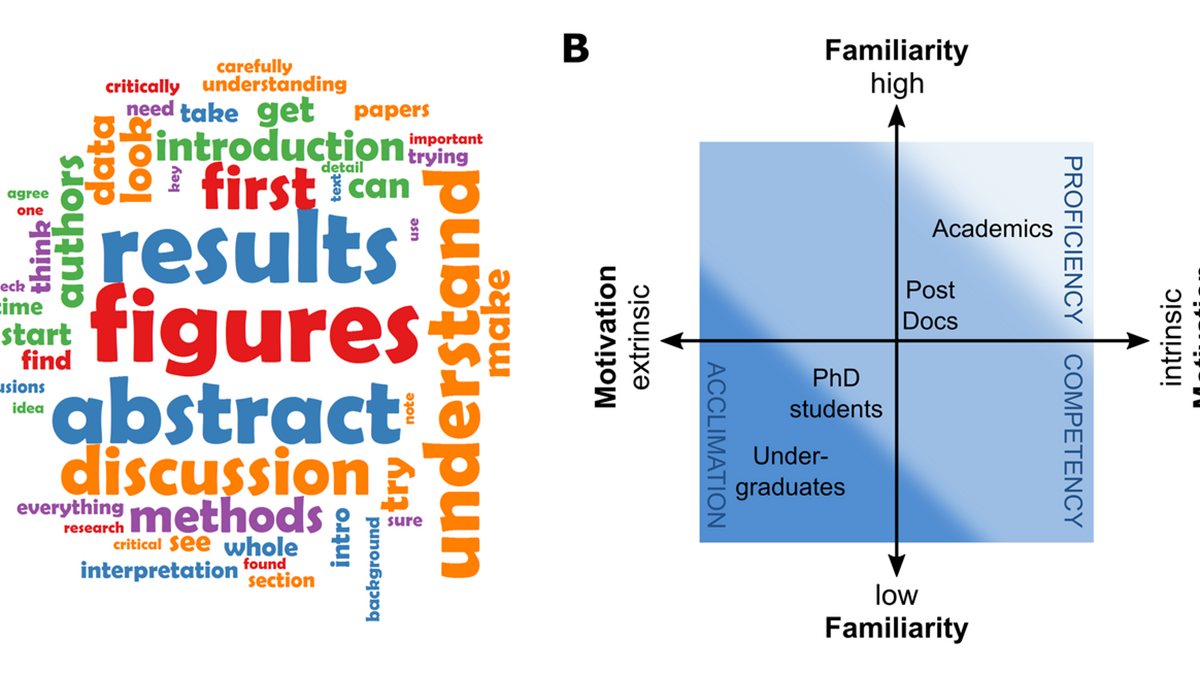
Reading a research paper from the first word to the last is slow and often confusing. Experienced researchers read in passes, deciding after each one whether to continue. A well-known version of this approach, described by computer scientist S. Keshav, uses three passes.
Pass 1: Survey (5 to 10 minutes)
Read the title, abstract and introduction. Skim the section headings. Read the conclusion. Glance at the figures and the reference list.
At the end, you should be able to answer: what type of paper is this, what problem does it address, what is the main claim, and is it relevant to me? Many papers stop here, and that is fine.
Pass 2: Understand the argument (about an hour)
Read the paper properly, but skip dense proofs and detailed statistics for now. Pay attention to figures and tables: check axes, labels and what is actually being compared. Note terms you do not understand and references you might follow up.
At the end, you should be able to summarise the main argument and evidence to someone else. If you cannot, use the Feynman technique to find the gaps.
Pass 3: Evaluate in depth (when it matters)
For papers central to your work, read critically. Examine the methods and assumptions. Could the results be explained another way? Is the sample appropriate? What limitations do the authors acknowledge, and which do they not?
Take notes that you will use later
For each paper, record the full reference, research question, method, key findings, limitations and your own comments in a consistent format. A shared template makes it easy to compare papers when you write your literature review.
Practical tips
- Read the abstract last on the second pass and check whether it matches what you understood.
- Keep a running glossary of field-specific terms.
- Do not get stuck on one difficult section; mark it and move on.
- Discuss papers with others. A reading group exposes gaps quickly.
Cover photo: Figure: Katharine E. Hubbard and Sonja D. Dunbar, CC BY 4.0, via Wikimedia Commons.