
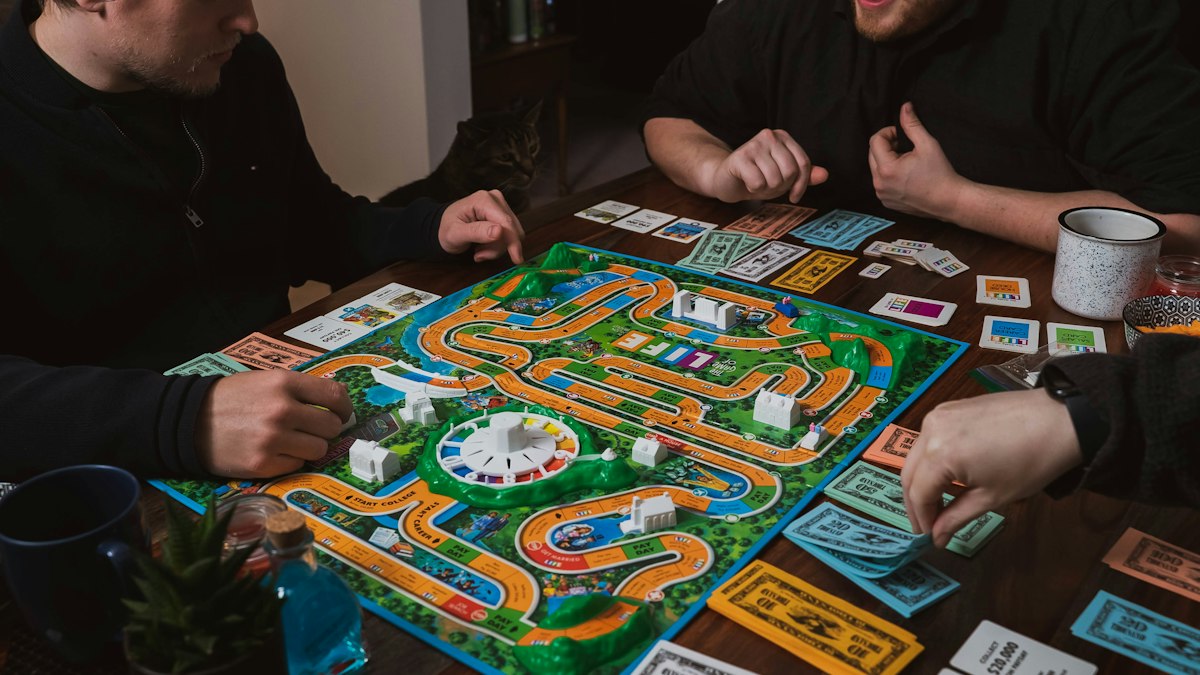
Modern board games go far beyond Monopoly. Here is how to choose games that suit your group, the main types to know, and well-loved starter games that are easy to learn.
If your experience of board games is long, argumentative rounds of Monopoly, modern games may surprise you. Over the past few decades, designers have created games that are quick to learn, finish in under an hour, keep everyone involved and reward clever decisions over luck. Here is how to find a good first game.
Know the main types
- Gateway games: simple rules, plenty of strategy, often 30 to 60 minutes. The best starting point.
- Cooperative games: everyone works together against the game. Great for groups that dislike direct competition.
- Party games: large groups, lots of talking and laughing, minimal rules.
- Two-player games: designed for couples or friends.
- Heavier strategy games: longer, more complex. Better once you know you enjoy the hobby.
How to choose
- Player count: check the box for the supported range, and look up reviews for the best number; some games play well at four but poorly at two.
- Play time: for a first game, under an hour.
- Complexity: look for games described as easy to teach. Community sites such as BoardGameGeek rate the "weight" of thousands of games.
- Theme: trains, farming, space, mysteries. A theme your group likes helps everyone engage.
- Interaction: some groups enjoy blocking and competition; others prefer games where everyone builds their own thing.
Well-loved starter games
These titles are widely recommended for new players and have stood the test of time. Several have won the Spiel des Jahres, Germany's influential game of the year award.
- Ticket to Ride: collect cards to claim train routes across a map. Simple turns, gentle tension, works for families.
- Carcassonne: draw and place tiles to build a medieval landscape of cities, roads and fields. Easy to learn, surprisingly strategic.
- Codenames: a team word-association party game. Excellent for larger groups.
- Pandemic: a cooperative game where players work together to stop the spread of diseases across the world.
- Azul: draft colourful tiles to decorate a palace wall. Beautiful, quick and clever.
- Splendor: collect gems to buy development cards. Short rules, satisfying engine-building.
- Catan: trade resources to build settlements. A classic gateway game with lots of player negotiation.
Tips for teaching a new game
- Learn it first. Read the rules or watch a rules video before game night.
- Start with the goal: how do you win?
- Explain a turn, then play an open practice round.
- Skip edge cases until they come up.
- Help new players without playing for them.
Try before you buy
Board game cafés, libraries, game shops with demo copies and local meetup groups let you try games before buying. Many popular games also have official digital versions on phones and computers that teach the rules interactively.
Make game night a habit
A regular night, monthly or fortnightly, gives friends something to look forward to and helps everyone improve. It is also a good antidote to evenings spent on screens; see digital minimalism. If your group prefers stories to strategy, a book club is another great social habit.











0 Comments
No comments yet — be the first to share what you think.